
It was Never Physical
On plants, gardening, and falling in love after abuse

If you’d prefer to listen to me read this story, you can do that here (but be sure to watch the video clip near the bottom):
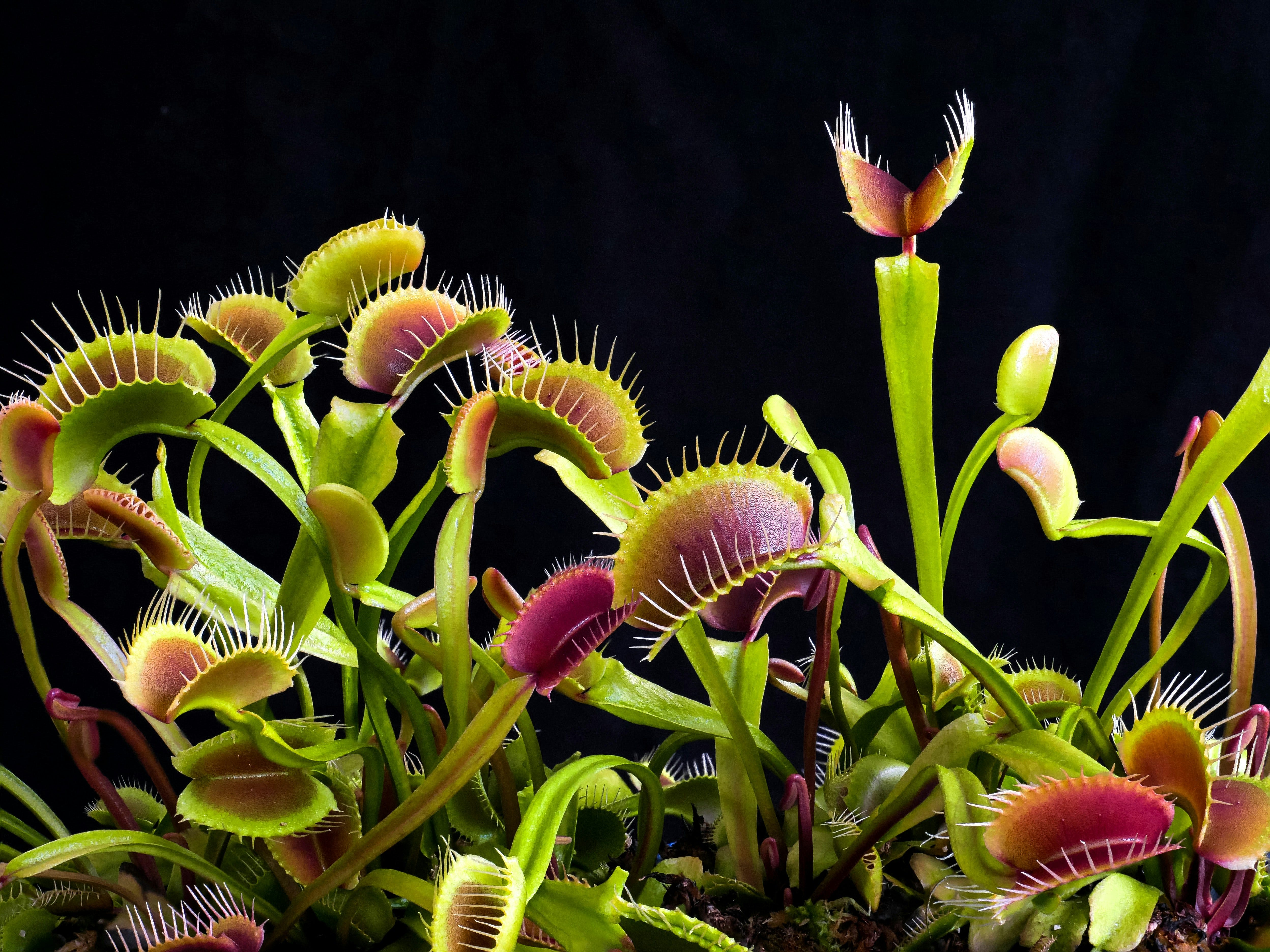
My first plant was a Venus flytrap. I saw it in a store when my parents and I were shopping. There was a whole table of them—they looked like little green aliens crowded together with their mouths stuck open. A sign explained that these were carnivorous plants. A small cartoon showed how their jaws snapped closed around their meal.
Wait, what? A plant that had… jaws?
A plant that ATE INSECTS??
This fascinated me.
I picked one up from the table to get a closer look—it was kind of scary with its row of sharp needle teeth, its wide-open throat tilted toward the ceiling, its eyeless face groping for a meal.
If I was a fly, I wouldn’t land in there.
I showed it to my parents. “Can I get this? It eats bugs.”
My Venus flytrap lived a short life on my bedroom windowsill. I checked its little mouth dozens of times a day, waiting to see if an errant housefly found its way inside. I wanted to know how it worked, how a plant could have jaws that closed around an insect. But it sat inert and flyless.
And I was impatient.
My plant needed help, I decided. I thought of places I’d seen flies. The long, rectangular fluorescent light fixtures at my elementary school always had lots of dead flies trapped inside, especially in the library. But we didn’t have fluorescent lights in our house, and if my mom saw me climbing on things to check the lights for bugs, I knew she would not like that. (She is probably reading this story right now, thinking, omg, where is she going with this??)
Eventually, I went outside and sourced a fly. I held it in my fist, but not too tightly—I felt it buzzing in my hand as I opened the sliding door and started back toward my bedroom. I tried to act natural; I didn’t want my mom to see me and ask, “What are you doing?” because if I told her, I knew she would get mad and say, “NO, YOU CANNOT BRING A FLY INTO THE HOUSE I DON’T CARE IF IT’S TO FEED YOUR PLANT!” and then I might have to put my plant outside, and if that happened, who would check on it dozens of times a day?
I carefully opened my hand, pinched the fly and dropped it into the mouth of my Venus flytrap. Its jaws stayed open, gaping up at the ceiling. The fly wriggled for a moment, then it flew away. It probably buzzed around our house until it died, possibly inside a light fixture. (Just kidding; it wasn’t in any of the lights. I checked.)
There was so much I didn’t know about my Venus flytrap. I didn’t know it could “count,”1 for instance, that it used something resembling logic to assess if what it felt was an insect or a false alarm. I didn’t know it spent precious energy closing its mouth, that if there wasn’t a meal inside, it could die.
None of this was explained on the tag.

Before I met my husband, Toby, I’d been in a long-term relationship with someone who was abusive. The abuse was never physical; it was something more difficult to name, and therefore, more difficult to recognize as abuse. This man and I had met before; we weren’t strangers—our sisters knew each other, but then my sister died. It was only then, in the aftermath of her death, that this man pursued me. I won’t speak to his motives, but I will say that I was terribly vulnerable and confused and willing to hold onto anything that looked to me like love.
Only what he offered wasn’t love.
I wanted out almost immediately, but I didn’t know how to leave, so I tried to make things better. Or at least, make them tolerable. I gave him more of myself. And more. And more. But nothing I did mattered. Was I the starving plant, dying from the inside out? Or was I the insect caught in the trap? I’m still not sure.
Here’s what I am sure of: Those years were a slow poisoning. An insidious whittling away. A gradual grinding down of my confidence, my spirit, my self.
And suddenly, it was over. I sobbed for a day—my body letting go of all I’d endured. I felt so much anger and sadness for what I’d been through, for all the time I’d wasted on him. He resurfaced soon after the break-up—circling with the same empty apologies, the promises to do better, the lies. That had been his pattern, but it didn’t work this time.
I was both relieved and discombobulated by my newfound freedom. One afternoon, I was wandering through the grocery store, drifting past all the things I no longer had to buy, and that’s when I saw them—a variety pack of seeds: tomato, basil, pepper, oregano, mint. I flipped the package to read the back. Was this something I wanted to try? I could hear the seeds clicking inside their little foil packets. It was almost spring—how fitting, right? I didn’t know shit about gardening, but I was free.
Something about the idea of planting seeds felt like renewal.
I put them in my cart. It was an impulse buy—the best I’ve ever made.
I quickly discovered that gardening was slightly more complicated than I’d assumed. This wasn’t like my Venus flytrap, although that plant was rather high maintenance. There were rules for when and where to plant everything. Each seed had unique needs for sunlight, water, soil type, spacing, depth.
And there was all this gardening jargon: direct sow, heirloom, “harden off” (wtf was that??)
I spent that spring learning and planting. As I tended to my seeds, I thought about the relationship I’d just escaped, and I wondered, not for the first time, if I had ever been loved, or if I had just been used. If I knew what love was or how it felt.
If I knew anything at all.
Everything I’d read about love—all the stories, all the songs, all the things I’d yearned for—was any of it real? Did anyone know? Were we all just pretending?
I really didn’t know. Not back then.
I wasn’t expecting to fall in love, not with gardening, not with anything or anyone. But as I watched my seedlings push their little green stems through the soil, that’s exactly what happened.
Toby and I met that summer—nearly bumped into each other, in fact (I wrote about it here, in Bright and Electric).
My seedlings were all outside by that point: six tomatoes, four peppers, several clusters of basil, and some out-of-control mint and oregano. I don’t know what I thought I was going to do with all of it. I created a “fence” out of a few pylons and random pieces of plywood to protect my little garden.
I showed it all to Toby. “Wow! Your plants are doing so well!” Then he gestured at my fence. “What’s this for?”
“Oh, that’s just a little something I put together to keep the pugs out of the garden,” I explained, as one of the pugs trotted up and absconded with a pylon from said fence (as seen in the video below).
“Is that… effective?”
“Not really,” I admitted, wrestling the pylon away. “But I don’t know how to build a real fence, so this is just what I came up with for now.”
“I could build you a fence.”
I considered this. My little garden did need to be protected, even if only from a couple of steamrolling pugs. But I was still a bit wary after what I’d been through. Could I allow Toby to do this thing for me?
Did I know the difference between fences and walls?
Between love and its disguises?
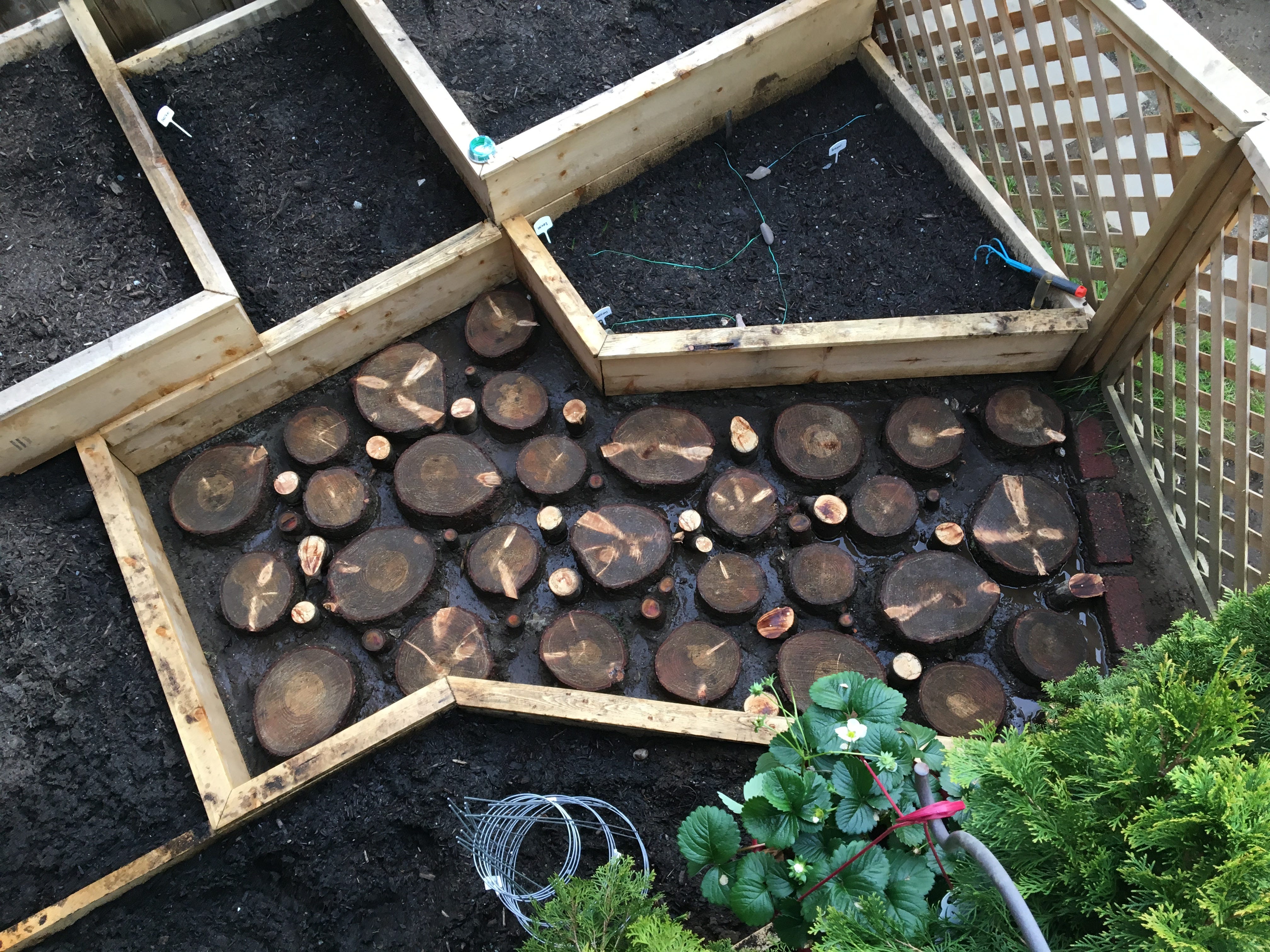
I looked at Toby—everything about him was real; being around him, you couldn’t help but sense that. A few weeks later, he came over with lumber and lattice and spent the weekend building this: a fence and a place for us to plant a garden.
For the first time in my life, I felt love brush against me, and I knew what it was.

Plants are pretty amazing. If you are curious about plants and all they can do, Zoë Schlanger’s book, The Light Eaters, is a must-read.
*Cover photo by Alisa Bright via Unsplash
Again Danielle amazing work. I love the humour you introduced. For the record, I don’t yell.
The way you weave curiosity, care, and recovery through something as ordinary as tending seeds is really striking. I love how learning what plants need becomes a mirror for learning what you need, without forcing a lesson onto it. The fence moment says so much about trust growing in real time. This leaves a strong sense of what it means to choose life again, slowly and on your own terms.